
Why Culture Matters in a Skilled Nursing Facility
(From Someone Who Spent a Decade Building It)
Culture is the single most underrated driver of census in skilled nursing. That sounds like a stretch until you look at the data: nursing staff turnover correlates with occupancy nearly twice as strongly as your CMS star rating does. I spent ten years at Eduro Healthcare, the last three as VP of Brand and Culture, while we grew from 4 facilities to more than 40. I watched culture get built, I watched what it did to our buildings, and I can tell you it was never about ping pong tables.
This post is my honest recap of what actually worked, what it cost, and how you can tell whether it's working in your building.
By Robert Tanner
Published August 1, 2026
Data CMS, JUNE 2026
Sample n = 14,695
What is culture in a nursing home, really?
Culture is what your employees say about your facility when they have nothing to gain and nothing to lose. That's my whole definition, and I landed on it after years of watching companies get it wrong.
For a while, culture became a corporate buzzword that mostly meant perks. The drink fridge, the snack station, the team celebrations that showed up in recruiting materials under some version of “work hard, play hard.” It always presented well on the outside. But when you talked to people who actually worked inside those companies, the story usually came with caveats.
Here's the test I trust. It's easy to talk up your employer when you're around coworkers or trying to recruit a friend into an open position. Of course you'll lead with the good stuff. But what happens when your CNA goes home and their spouse asks, “What's it really like there?” What do they say when nobody's listening and there's no angle? That answer is your culture. Everything else is marketing.
Why does culture matter in a skilled nursing facility?
Culture matters in a SNF because it drives retention, and retention drives nearly everything you're measured on, including census. When employees are happy and doing their best work, they stay. And when they stay, the data shows your average occupancy actually increases. What's wild is that this relationship is stronger than the one between occupancy and your star rating. I ran the numbers myself across roughly 14,400 facilities, and star ratings explain only about 1% of the variance in occupancy, while nursing turnover is the strongest controllable facility-level signal I tested. You can read the full study here.
The direct benefit is obvious: fewer open positions, less agency spend, less time recruiting. But the indirect benefits of keeping people long term are where it really compounds. Long-tenured staff enjoy their work more because they're spending their shifts with friends and colleagues they've known for years rather than learning new names every week. They know your processes, your policies, and your systems, so things get done the way they're supposed to get done in your building. You lose far less time and money to training and the learning curve that comes with every new hire.
In healthcare specifically, that stability shows up in outcomes. Fewer rehospitalizations, fewer survey tags, better clinical and financial results, all because experienced people are working the way you want them to. Positive culture goes both ways. It keeps your people happy, and those happy people give you the results that keep ownership happy too.
You don't have to take my word for it either. The money side of this industry has said the same thing on the record. Back in 2022, when CareTrust REIT added another Texas building to its master lease with Eduro, CareTrust President and CEO David Sedgwick said the REIT was elated to keep growing with an operator whose “extreme focus on facility culture produces great results for their residents and staff.” When a publicly traded REIT points to culture as a reason it keeps handing an operator more buildings, it’s probably something that we should focus on.
What building culture looked like at Eduro
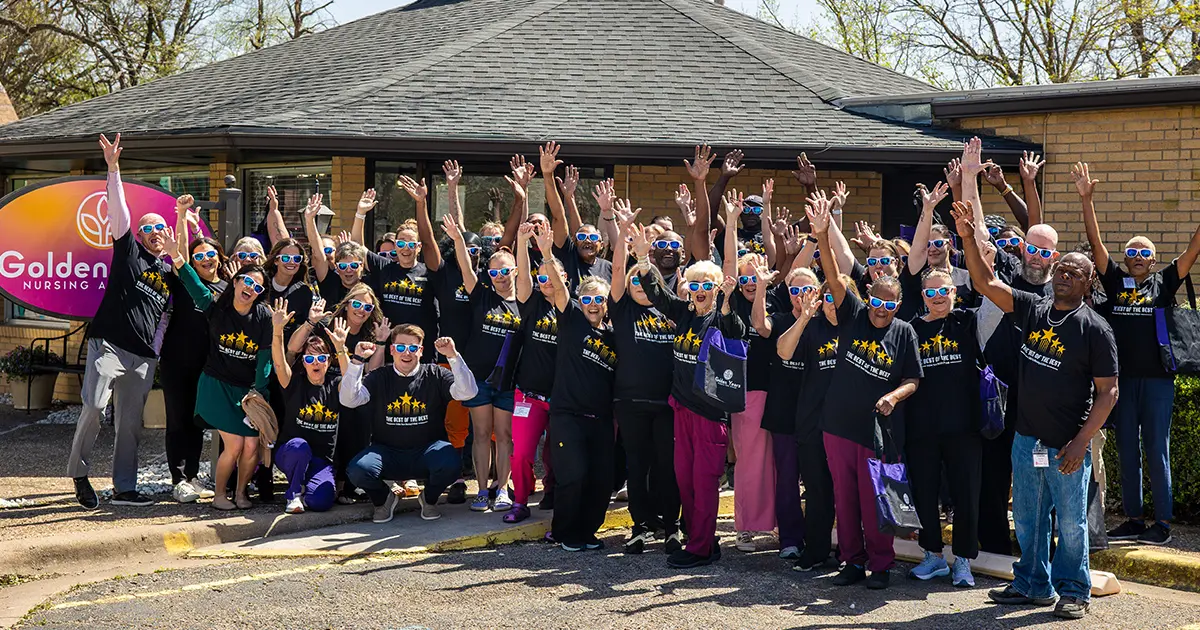
At Eduro, culture wasn't a program, it was the operating philosophy, and it started with the core values: wellness, compassion, experience, and results, in that specific order. The owner talked constantly about why wellness came first. His belief was that our own employees needed to be well before they could ever help our patients achieve the same thing. The core values applied just as much to our staff as they did to our residents, and that ordering shaped real decisions about employee satisfaction and work-life balance for a decade.
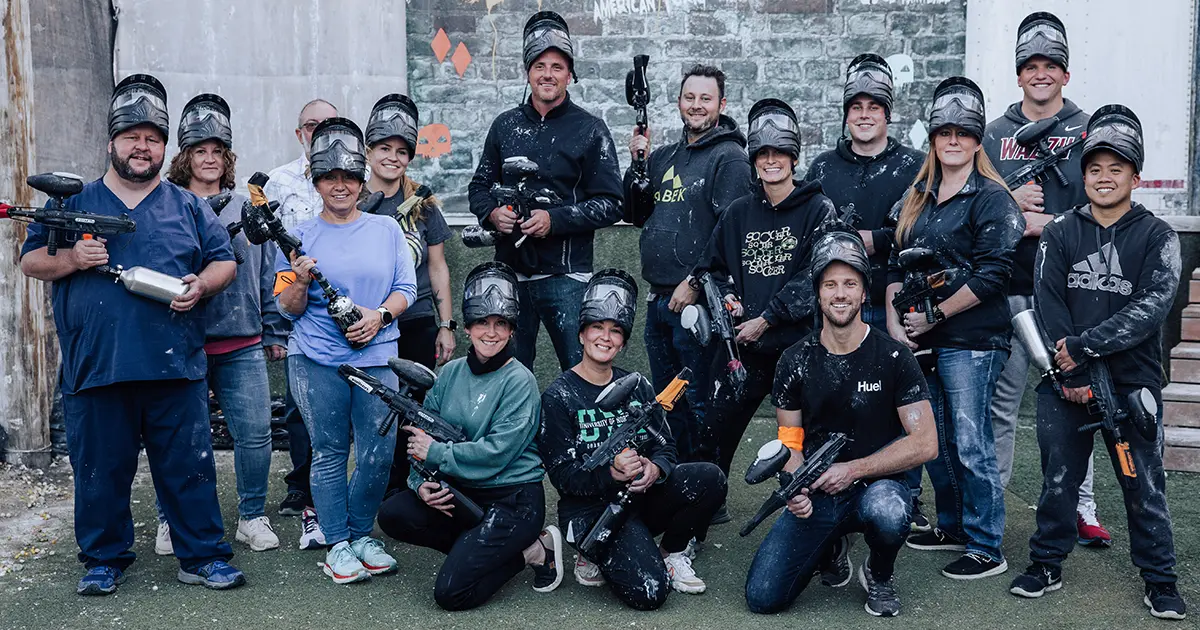
This wasn't just internal messaging either. In December 2025, McKnight's Long-Term Care News profiled Eduro, and when founder Michael Bewsey talked about what set the company apart, he pointed to two executive roles he had championed. One of them was a vice president of brand and culture. That was my seat. He told McKnight's the whole purpose of the role was “really to take care of our people,” and he described culture as paramount to everything Eduro was doing. When culture matters enough to get a seat at the executive table, it stops being a poster in the break room and becomes an actual strategy.
The real proof came at the end. When PACS Group announced this summer that it was acquiring 34 of Eduro's facilities, culture showed up on both sides of the transaction. In the acquisition announcement, Bewsey said what mattered most in choosing a partner was “finding an organization that would genuinely embrace our culture and core values.” And the buyer said it right back: PACS President and COO Josh Jergensen credited the team with building “a consistent, high-performing organization” and said PACS planned to carry that forward. Think about that for a second. Culture was a stated criterion on both sides of a 34-facility deal. That's what this investment looks like when it fully matures.
Inside the company, the story was the same. The hardest part of the acquisition for our people wasn't the business change, it was the fear of losing what we'd built. I can't tell you how many comments I heard from corporate and facility employees alike, some version of “Eduro has been so different from anywhere else I've worked. People here love what they do and who they work with.” Nobody was recruiting anyone. There was nothing to gain by saying it. That would pass the spouse test, and it was external validation of something I knew had been working internally for years.
Eduro never reinvented skilled nursing. We didn't have some groundbreaking clinical method or financial model. We took care of our employees well and built something people would vouch for when it counted.
How do you build a positive culture in a nursing home?
Building culture in a SNF comes down to consistent, meaningful employee recognition, and the key word is meaningful. Your staff wants to be seen. Yes, the work is in their job description and yes, they're being paid to do it, but that doesn't make it any less important to your residents or any less deserving of recognition.
Beware of surface-level recognition. We've all seen the pizza party get torn apart on social media, and it backfires for a reason. It’s clearly the bare minimum, and your people deserve more. You can't be lazy about this. You have to think about what's actually meaningful to your staff in your community. The good news is that meaningful doesn’t necessarily mean expensive.
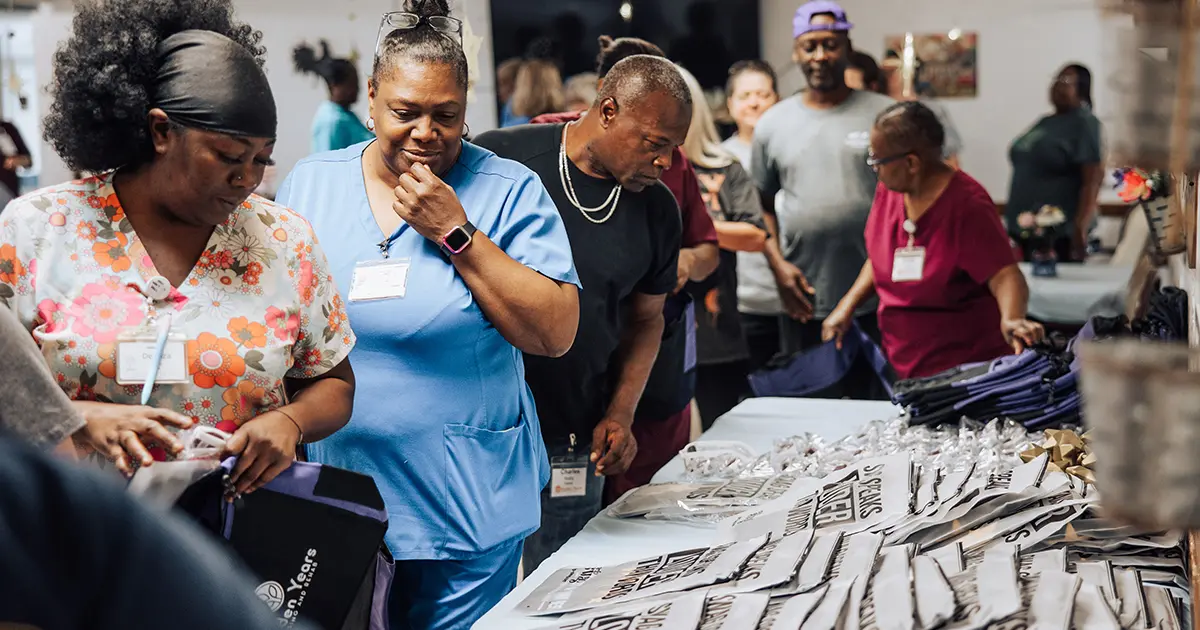
Low-cost ways to recognize SNF staff that actually work
These are recognition tactics I've personally seen work inside skilled nursing facilities, most of them for very little money:
- Custom years-of-service pins. A small, tangible marker of tenure that people love to wear. It signals that staying matters here, which is the exact behavior you're trying to build.
- Digital displays spotlighting anniversaries and birthdays. A screen in the break room or lobby that rotates through employee milestones. Have HR manage this and watch people begin to hover in that area.
- Employee of the month framed photos on the wall. Old school, but still works. Families and referral partners walking your building see it too, which tells them your staff sticks around.
- A reserved parking space for the honoree. Costs you a sign and little bit of paint.
- Social media shout-outs with a photo of the employee. This one is a double win. It makes the employee feel valued in front of their own friends and family, and employee spotlights are consistently one of the highest-engagement post types a facility Facebook page can run. If your page is struggling for reach, start here.
- Handwritten notes from the administrator. Nearly free, and I've seen people hang onto these for years.
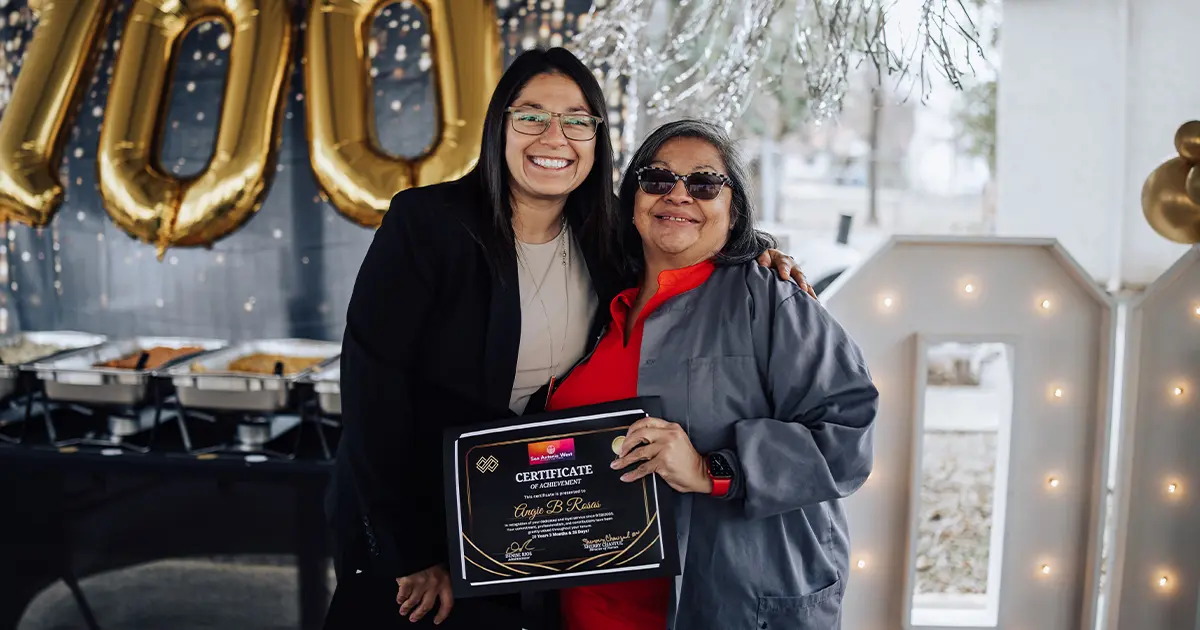
Celebrate the big wins with a real celebration
When your team hits a collective goal, the celebration should match the achievement. Going from two stars to three or four deserves more than a banner in the break room, because a lot of people had to pull in the same direction to get there. Same with hitting a census number the whole building has been chasing.
I built a formula for these at Eduro and it worked exceptionally well. The structure was simple:
- Catered lunch for all staff. Not just day shift. If nights and weekends get leftovers, they get the message.
- A gift for every single employee. A fancy custom tumbler, a t-shirt, a backpack, etc. Everyone walks away with something, and it becomes a trophy they wear and use for years after helping reach that outcome.
- A raffle with real prizes. Every employee gets one ticket automatically, and they can earn more through things like trivia, or evenly measured metrics like no missed shifts, however you want to design it. Then you raffle off a handful of awesome prizes, using whatever budget you can spare.
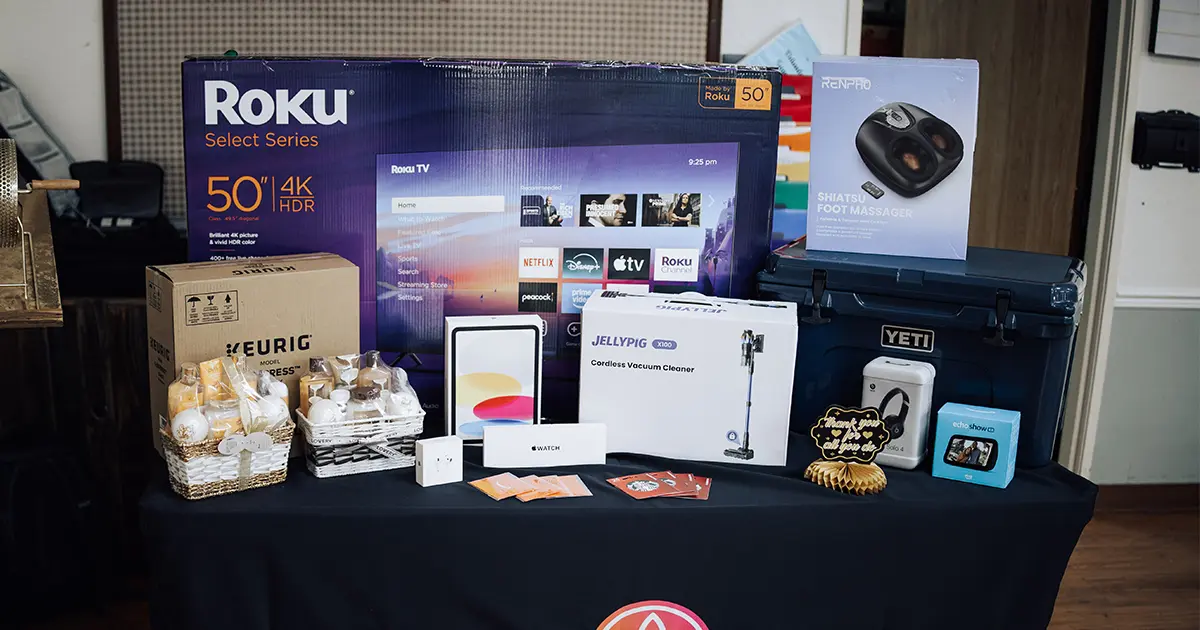
Here's the part administrators sometimes miss. Winning an iPad or a Keurig doesn't feel life-changing on an administrator's salary, so it's easy to underestimate. But for an entry-level CNA or someone in dietary or housekeeping, coming home with a big-screen TV or a Nintendo Switch for their kids is a serious highlight of their year. They feel like they earned it, and at the same time they know the company didn't have to do it. That combination creates real appreciation, and it's how you turn an employee into an advocate who stays. The ROI won't show up in next month's financials, which is probably why it gets overlooked. But after years of running this at Eduro, I can tell you it pays off.
Culture is also about you, Administrator
There's an unspoken side of culture that's worth naming: your own job satisfaction. Administrators bounce around in this industry, and the grass always looks greener. But the admins I know who stayed at their buildings long term usually walked into a mess, because that's typically why the position was open in the first place, and then did the hard work of fixing it.
Once you've solved those early problems and built a team that works well together, the job changes. You're no longer spending your days putting out fires and refereeing disputes between people who work side by side every day. I've been amazed at how many petty conflicts happen inside a building, and administrators usually have to deal with it. A positive culture doesn't eliminate those problems, but it reduces both how often they happen and how bad they get. The right people solve issues before they ever reach your door, and when something does reach you, you have the personnel and systems to resolve it early instead of letting it fester into something that affects your outcomes.
Less of that burden means more job satisfaction, which means you stay, which means the momentum you've built keeps compounding instead of resetting. Starting over at a new building always looks tempting from the outside, but there's always more work hidden beneath the surface than the job posting lets on.
How do you know if your culture is actually improving?
You can measure culture improvement in a SNF by tracking a handful of numbers you already have. You don't need a survey vendor to get started:
- Total nursing staff turnover. CMS publishes this for your facility now, which means your referral sources and competitors can see it too. This is the headline number, and it's the one my research tied directly to occupancy.
- 90-day new hire retention. If people are leaving within their first three months, your culture problem starts at onboarding.
- Agency and registry usage. Reduced agency hours are one of the fastest financial proofs that retention is improving.
- Internal referrals. When your own staff starts recruiting their friends and family to work for you, that's the spouse test showing up in your hiring data. I think this is one of the best signals that the culture is actually strong.
- Exit interview themes. Not the number, the reasons. “Moving out of state” and “found a shorter commute” tell a very different story than “leadership” and “scheduling.”
Pick two or three, put them on the same dashboard you review census on, and watch them over quarters, not weeks. Culture moves slowly in both directions, which is exactly why the operators who invest in it consistently end up so far ahead of the ones who don't.
The bottom line
Building culture is a long-term investment that touches far more than what you see on the surface, with direct benefits to your clinical and financial outcomes and to your census. There's no shortcut and no budget line that buys it for you. You have to be creative, you have to keep it front of mind, and you have to be willing to put in the work consistently. But I spent a decade watching it compound at Eduro, and I can tell you the operators who commit to it are playing a different game than everyone else.
One more thing I didn't cover here: none of this works if you have the wrong people in the building, and getting the right people in (and the wrong people out) is a big enough topic that it deserves its own post. That one's coming.

Frequently asked questions
Why is culture important in a skilled nursing facility?
Culture drives staff retention, and retention has a stronger measurable relationship with occupancy than CMS star ratings do. Beyond census, stable long-tenured teams produce fewer rehospitalizations, fewer survey tags, and better clinical and financial outcomes.
How do you improve culture in a nursing home without a big budget?
Start with consistent, meaningful recognition: years-of-service pins, employee spotlights on social media, milestone displays, reserved parking for honorees, and handwritten notes from leadership. Meaningful matters more than expensive, and most of these cost almost nothing.
Does reducing turnover really increase census?
How long does it take to change culture in a SNF?
Expect quarters, not weeks. Track leading indicators like 90-day new hire retention and agency usage to see early movement, but the compounding benefits of retention typically show up over one to two years of consistent effort.

Robert Tanner
Robert Tanner is the founder of BedLaunch, a census growth consultancy for skilled nursing operators. He spent ten years as the corporate marketing resource inside a skilled nursing operating company that grew from four facilities to more than forty, most recently as Vice President of Brand and Culture, supporting facility marketing directors on referral development across the portfolio.